Windows File Explorer is one of the most important parts of the operating system. We use it every day to open files, manage folders, access drives, and organize our data.
However, some Windows 11 users experience problems where File Explorer suddenly crashes, freezes, or stops responding.
Common situations include:
- File Explorer closes automatically
- Folders take too long to open
- Right-click menu freezes
- File Explorer keeps restarting
- Windows becomes slow when opening files
In this guide, I will share the most effective methods to fix File Explorer crashing problems in Windows 11 without reinstalling Windows.
Why Does File Explorer Crash in Windows 11?
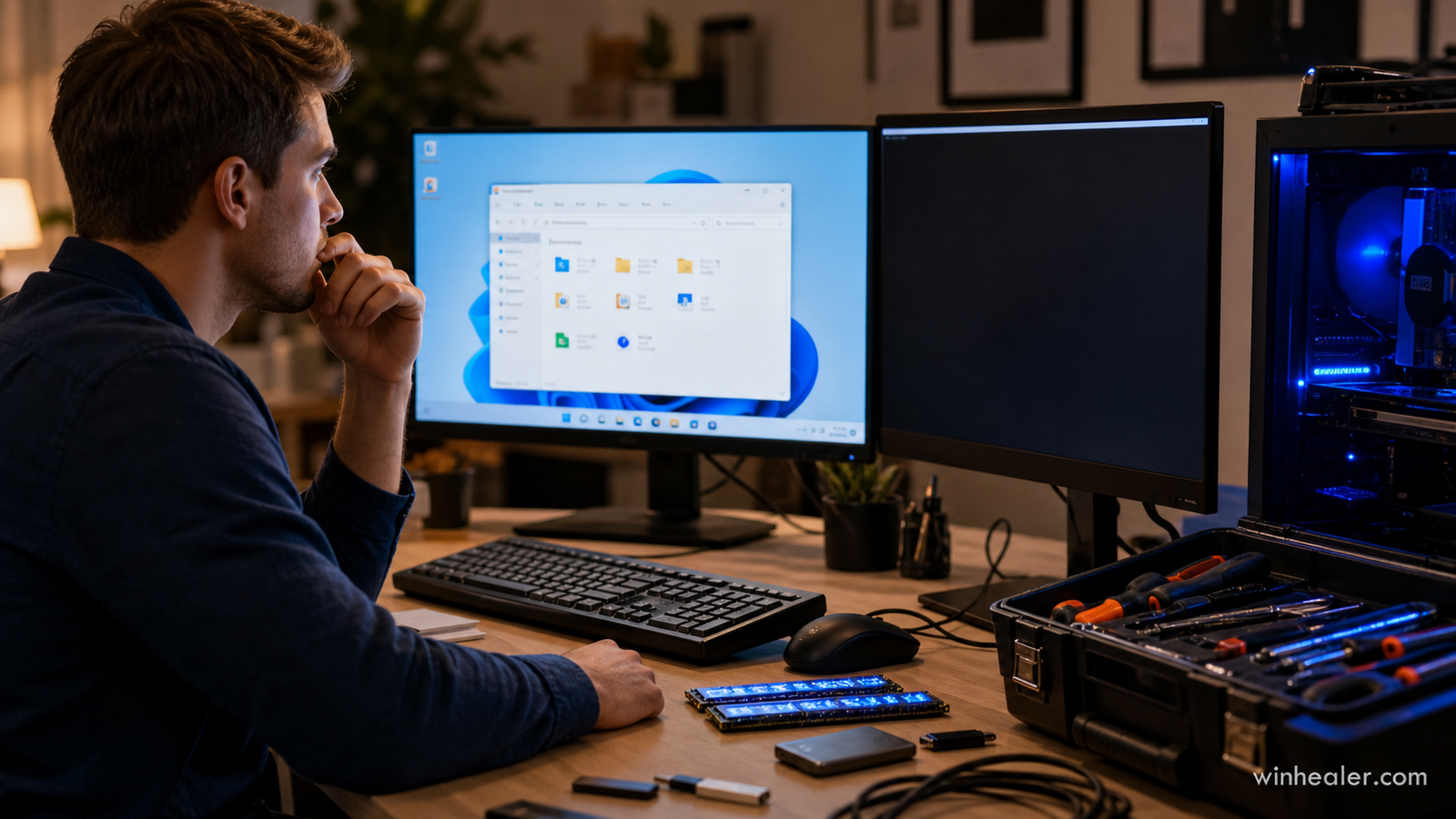
There can be several reasons behind File Explorer crashes:
- Corrupted system files
- Damaged Windows updates
- Outdated drivers
- Third-party software conflicts
- Too many background extensions
- Corrupted File Explorer cache
- Low system resources
- Malware or unwanted programs
Finding the reason helps you apply the correct solution.
Method 1: Restart Windows Explorer
Sometimes File Explorer crashes because the Explorer process becomes stuck.
Steps:
- Press:
Ctrl + Shift + Esc
- Open:
Task Manager
- Find:
Windows Explorer
- Right-click it
- Select:
Restart
Your desktop and taskbar will refresh automatically.
Method 2: Restart Your PC
A simple restart can fix temporary system problems.
Restarting helps clear:
- Memory issues
- Stuck background processes
- Temporary Windows errors
Always try this basic step before advanced troubleshooting.
Method 3: Clear File Explorer History
A corrupted File Explorer history can cause crashes.
Steps:
- Open:
Control Panel
- Search:
File Explorer Options
- Under the General tab:
Click:
Clear
next to “Clear File Explorer history”
- Click:
Apply → OK
Restart your computer.
Method 4: Repair Windows System Files
Corrupted Windows files are one of the biggest causes of Explorer crashes.
Open:
Command Prompt as Administrator
Run:
sfc /scannowAfter the scan completes, run:
DISM /Online /Cleanup-Image /RestoreHealthThese commands repair damaged Windows components.
Method 5: Update Windows 11
Microsoft regularly releases fixes for Explorer problems.
Check for updates:
Go to:
Settings → Windows Update → Check for Updates
Install available updates and restart your PC.
Method 6: Update Graphics Drivers
File Explorer uses Windows graphics components, so outdated GPU drivers can sometimes cause crashes.
Update:
- NVIDIA drivers
- AMD Radeon drivers
- Intel graphics drivers
You can update them through:
- Device Manager
- GPU manufacturer’s official software
Method 7: Disable Third-Party Shell Extensions
Some applications add options to the right-click menu.
Examples:
- Compression tools
- Cloud storage apps
- Antivirus software
- Editing programs
These extensions can cause File Explorer crashes.
Try disabling unnecessary extensions and check if Explorer becomes stable.
Method 8: Check for Malware
Malware can affect Windows processes, including File Explorer.
Run:
Windows Security → Virus & Threat Protection → Full Scan
Remove any detected threats.
Method 9: Optimize Quick Access
Sometimes Quick Access history becomes corrupted.
Steps:
- Open File Explorer
- Click:
Three dots → Options
- Under Privacy:
Disable:
- Show recently used files
- Show frequently used folders
- Click:
Clear
Restart File Explorer.
Method 10: Check Your Storage Drive
A damaged HDD or SSD can cause File Explorer freezing.
Check your drive:
Open Command Prompt as Administrator:
chkdsk C: /fWindows may ask for a restart to complete the scan.
Method 11: Perform a Clean Boot
A background application may be causing the crash.
Clean Boot starts Windows with minimal services.
Steps:
- Press:
Windows Key + R
- Type:
msconfig- Disable unnecessary startup services
- Restart your PC
If File Explorer works normally, a third-party program may be the cause.
My Personal Recommendation
From my experience, most File Explorer crashes happen because of:
- Corrupted system files
- Old graphics drivers
- Problematic third-party extensions
- Damaged Windows update files
Before resetting Windows, try repairing system files and updating drivers first.
Most File Explorer issues can be fixed without losing your personal data.
Final Thoughts
File Explorer crashes can be annoying, especially when you are trying to access important files. Fortunately, Windows 11 provides several built-in tools to repair these problems.
Start with simple fixes:
✔ Restart Windows Explorer
✔ Clear Explorer history
✔ Update drivers
✔ Repair system files
✔ Check storage health
With proper maintenance, File Explorer can run smoothly and reliably.
For more Windows troubleshooting guides, PC optimization tips, gaming fixes, and hardware updates, keep following WinHealer.