RAM prices are still climbing in 2026, and the reason is bigger than a temporary shortage at your local computer shop. Memory suppliers have gained pricing power as AI servers, cloud providers, phones, laptops, and ordinary PCs compete for limited DRAM production. The pace of the increase is expected to slow in the third quarter, but that does not mean memory has suddenly become cheap again.
TrendForce projected conventional DRAM contract prices to rise by another 13% to 18% quarter over quarter in Q3 2026. That is a much smaller jump than the roughly 58% to 63% increase it forecast for Q2, yet it still points upward. For anyone planning a gaming PC, workstation, or laptop upgrade, the important question is no longer simply “Will RAM cost more?” It is whether waiting will produce a meaningful saving.
What is happening to RAM prices?
The first half of 2026 brought unusually sharp increases in contract prices—the prices negotiated between chip suppliers and large customers. TrendForce said PC DRAM prices were projected to rise by more than 100% quarter over quarter in Q1. Its March outlook then estimated a further 58% to 63% rise for conventional DRAM in Q2.
Those figures do not translate directly into a 100% increase on every retail kit. A shop’s price also reflects inventory purchased earlier, distributor costs, promotions, currency movements, taxes, and the brand’s margin. This is why one 32GB DDR5 kit may become expensive while another briefly goes on sale. Retail pricing often follows the contract market with a delay and can be much messier.
Why memory is becoming more expensive
1. AI servers are consuming more advanced memory
AI infrastructure uses enormous quantities of memory. High-bandwidth memory, server DDR5, and conventional DRAM are not identical products, but they compete for investment, manufacturing attention, equipment, and advanced production capacity. Suppliers naturally prioritize products and customers that offer strong, predictable returns.
Cloud companies have also been securing supply through long-term agreements. That reduces the amount of flexible capacity available to buyers who arrive later. It is one reason a slowdown in consumer PC demand does not automatically produce cheap RAM.
2. Manufacturers are cautious about adding supply
Memory is a famously cyclical business. When suppliers produce too much, prices can collapse quickly. After experiencing those downturns, manufacturers have little incentive to flood the market just because prices are high for a few quarters. New fabrication capacity also takes time and billions of dollars; it cannot be switched on like an extra production line in a small factory.
3. DDR4 production is being reduced
Older memory is not guaranteed to become cheaper forever. As major suppliers move away from legacy processes and prioritize DDR5 and server products, DDR4 supply can tighten even while millions of compatible PCs remain in use. TrendForce has repeatedly linked the 2026 rise in older consumer DRAM prices to end-of-life plans and reduced legacy-node supply.
This creates a strange market: DDR4 may be older, but certain kits can become poor value simply because fewer chips are being made. DDR3 and even older products can experience the same effect in specialist systems.
4. Buyers stocked up when shortages became obvious
PC makers, module brands, and large technology companies do not like uncertain supply. When they expect prices to rise, they often place orders earlier or reserve more inventory. That behavior is understandable, but it can make a shortage feel worse in the short term and strengthen suppliers’ ability to raise prices.
Is the RAM price increase slowing down?
Yes—but “slowing” and “falling” are not the same thing.
The Q3 forecast of a 13% to 18% conventional DRAM increase is less dramatic than the jump expected in Q2. TrendForce’s explanation is important: consumer electronics makers are reaching the limit of what they can absorb. Demand is being restrained by high costs, while the underlying supply pressure remains.
Retail prices may still dip for a weekend sale, a particular color, or inventory a retailer wants to clear. DDR5 spot prices can also move differently from contract prices. A short correction in a few popular kits is not proof that the broader cycle has reversed.
Should you buy RAM now or wait?
There is no answer that fits every build, but these practical rules avoid most expensive mistakes.
- Buy now if RAM is the only part stopping a working build. Saving a small amount later is rarely worth leaving an expensive CPU, GPU, and motherboard unused.
- Wait if your current PC already has enough memory. A move from 32GB to 64GB does not improve ordinary gaming performance when your games and background apps are not using the existing capacity.
- Watch complete kit prices, not the price per module. Matched two-stick kits are preferable to mixing separate kits, even when their model numbers appear identical.
- Set a target, not an endless waiting period. Compare several established retailers for a week or two. If a compatible kit reaches a price you can accept, buy it and move on.
How much RAM should a PC buyer choose in 2026?
16GB remains workable for an entry-level Windows 11 PC and many games, provided you do not keep heavy creative tools or dozens of browser tabs open at the same time. For a new gaming build, however, 16GB is increasingly the budget choice rather than the comfortable long-term choice.
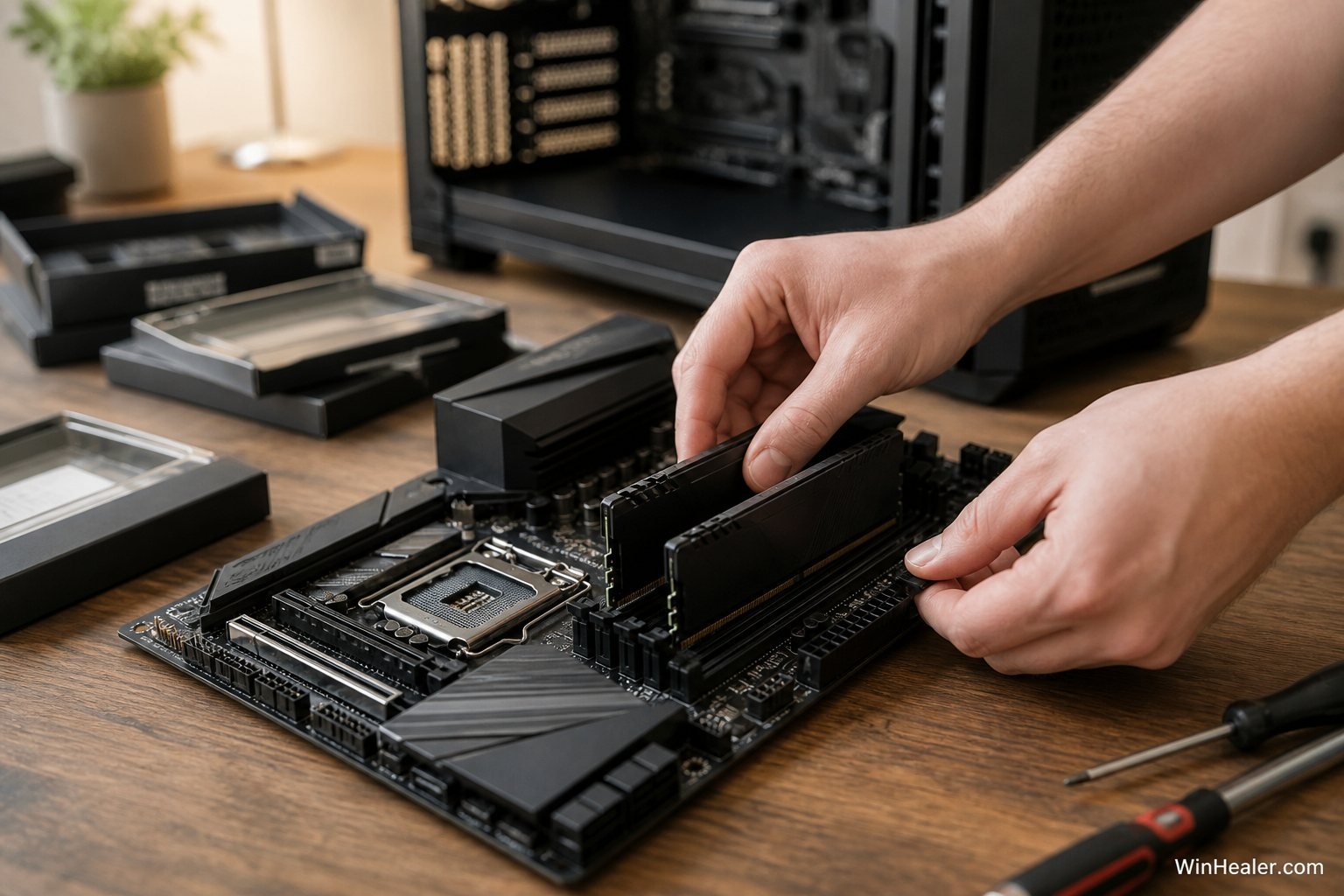
32GB is the sensible target for most gaming PCs. It gives modern games, launchers, voice chat, browsers, and background utilities breathing room without paying for capacity that may sit unused. A 2x16GB configuration is generally preferable to a single 32GB module because it enables the intended multi-channel memory arrangement on mainstream platforms.
64GB is useful for specific workloads: large video projects, high-resolution photo batches, virtual machines, software development, local AI tools, heavy simulation, and some heavily modified games. It is not automatically “future-proof” for a normal gaming computer. If the extra capacity forces you to compromise on the GPU, storage, or power supply, 32GB is often the better-balanced choice.
DDR4 or DDR5: which is the safer buy?
Compatibility decides first. An AM4 or DDR4 Intel motherboard cannot use DDR5, and an AM5 system requires DDR5. The notch position and electrical design are different; the modules are not interchangeable.
For an existing DDR4 computer, adding compatible DDR4 can still be worthwhile if the CPU remains fast enough for your work. Do not replace an entire platform merely because DDR4 prices are rising. Compare the cost of the memory upgrade with the cost of a new motherboard, processor, and DDR5 kit.
For a completely new midrange or high-end build, DDR5 usually makes more sense because current platforms support it and future upgrades are more likely to remain on it. That is a platform decision, not a claim that every expensive, ultra-fast kit is good value.
How to avoid overpaying for RAM
- Check the motherboard memory support. Confirm DDR generation, maximum capacity, and recommended slot layout. The qualified vendor list is helpful, although a kit can work even when it is not explicitly listed.
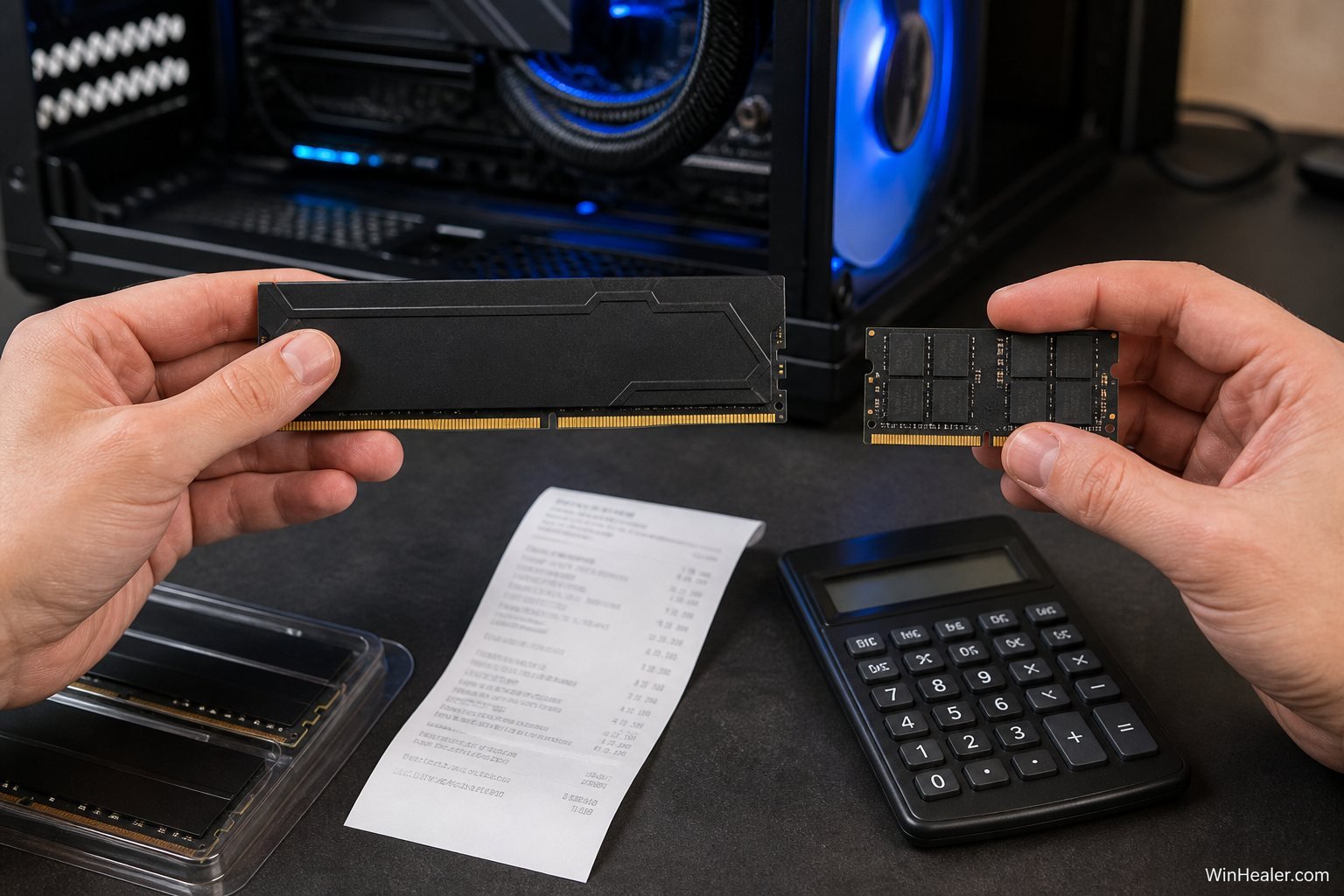
- Compare like with like. Capacity, module count, speed, primary timings, voltage, ECC support, and DIMM versus SO-DIMM all affect price.
- Do not pay a large premium for tiny speed gains. A stable, reasonably timed kit at the platform’s practical sweet spot is usually better value than a flagship frequency with little real-world benefit.
- Avoid unknown sellers and suspicious “rebranded” kits. Memory errors can appear as game crashes, corrupted files, failed Windows installations, or random blue screens. A reliable warranty matters.
- Keep the receipt and test immediately. Enable the appropriate XMP or EXPO profile only after confirming the system boots at default settings, then run a proper memory test.
What could make RAM prices fall again?
A meaningful decline would likely require some combination of added production, weaker server demand, lower inventory building, and retailers competing to clear stock. None of those changes happens instantly. Even if chip prices stabilize, modules already purchased at higher wholesale costs may remain expensive until that inventory moves through the channel.
The opposite risk remains too: another supply disruption, stronger-than-expected AI investment, or faster retirement of older production could keep prices elevated. That uncertainty is why buying according to need is safer than trying to predict the exact top or bottom of the market.
The bottom line
The 2026 RAM story is not simply that “AI made everything expensive.” AI and cloud demand are central, but supplier discipline, long-term contracts, legacy-product phase-outs, and cautious capacity expansion all matter. Price growth is expected to moderate in Q3, yet the market is still tight and another increase is forecast.
If you are building now, prioritize a compatible 32GB matched kit at a reasonable price rather than chasing extreme specifications. If your current PC already has enough memory, there is no need to buy out of fear. Watch the exact kit you need, compare reputable retailers, and let your workload—not a dramatic headline—decide.
Sources and further reading
- TrendForce: AI server demand and Q2 2026 memory contract pricing
- TrendForce: Q1 2026 memory price outlook
- TrendForce: consumer DRAM supply and legacy-product pricing
- TrendForce: DDR5 demand and DDR4/DDR3 tightness
Editorial note: Memory prices change by region, retailer, capacity, and date. Market forecasts describe broad contract trends and should not be treated as a guaranteed retail price for a specific kit.