If you’ve noticed that your OneDrive shortcuts stop working when File Explorer is launched as Administrator, you’re not the only one. Some Windows users have reported that folders added through OneDrive shortcuts become inaccessible or fail to open correctly when File Explorer is running with elevated privileges.
This guide explains why the issue happens and the best ways to fix it.
Why Does This Problem Occur?
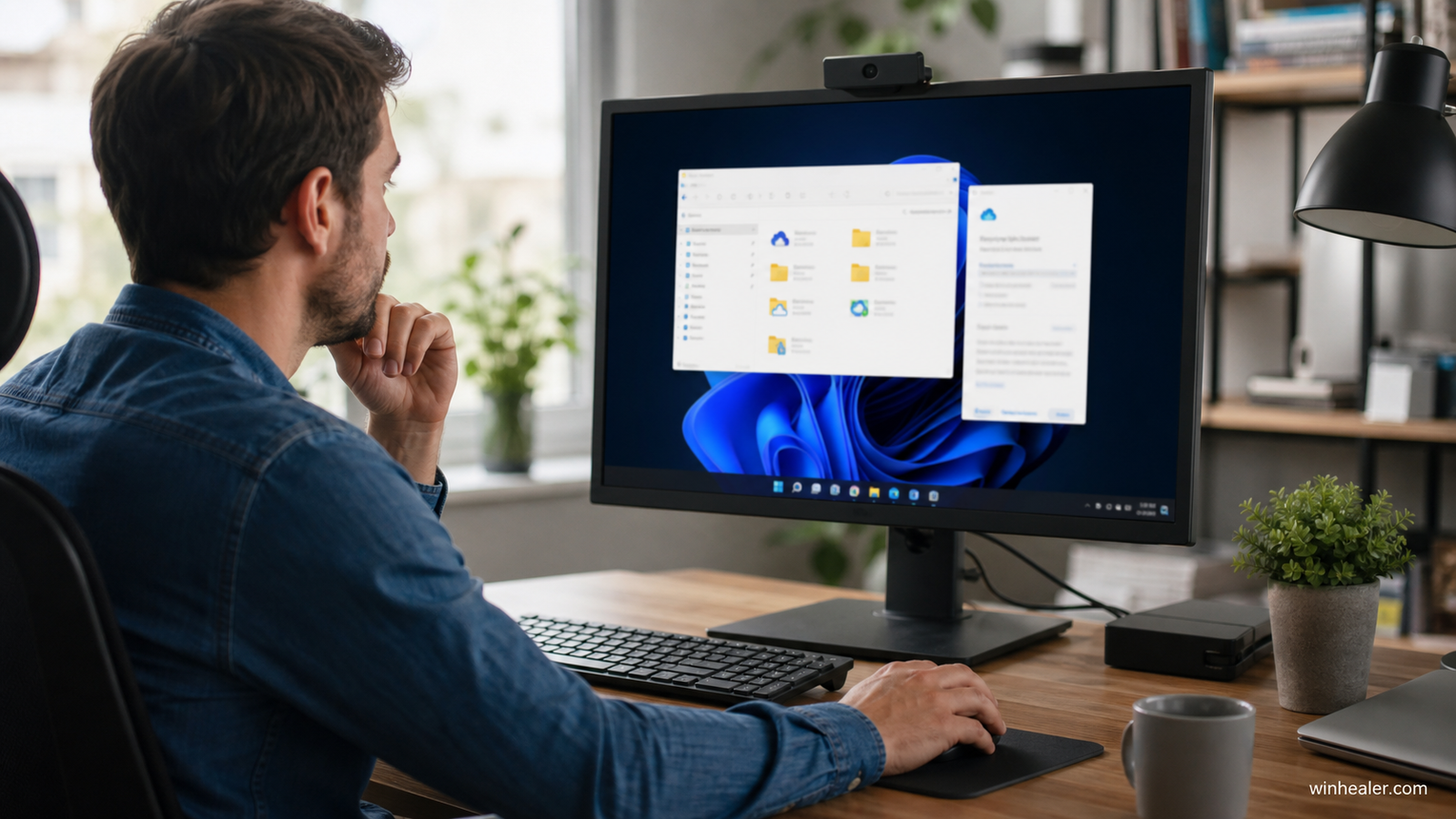
Windows uses different security contexts for standard and administrator-level applications. Since OneDrive typically runs under your normal user account, File Explorer running with administrator privileges may not be able to communicate with OneDrive in the same way.
As a result, you may experience:
- OneDrive shortcuts that won’t open.
- Missing shortcut folders in File Explorer.
- “Location is unavailable” errors.
- Sync folders appearing empty.
- OneDrive shortcuts failing only when File Explorer is opened as Administrator.
Solution 1: Open File Explorer Normally
In most cases, the simplest solution is to avoid running File Explorer as Administrator.
To check:
- Close all File Explorer windows.
- Open File Explorer from the taskbar or Start menu.
- Try accessing the OneDrive shortcut again.
If the shortcut works normally, the issue is related to elevated permissions rather than OneDrive itself.
Solution 2: Restart OneDrive
Restarting OneDrive can restore communication between Windows Explorer and the sync client.
Steps:
- Right-click the OneDrive icon in the system tray.
- Select Quit OneDrive.
- Open the Start menu.
- Search for OneDrive.
- Launch it again and allow synchronization to complete.
Solution 3: Check OneDrive Sync Status
If synchronization has stopped, shortcuts may not load correctly.
Open OneDrive and verify that:
- You’re signed in.
- Sync is active.
- There are no sync errors.
- The shortcut folder has finished downloading.
Resolve any sync issues before testing File Explorer again.
Solution 4: Install the Latest Windows Updates
Microsoft regularly releases updates that improve compatibility between Windows and OneDrive.
To check for updates:
- Open Settings.
- Select Windows Update.
- Click Check for updates.
- Install any available updates and restart your computer.
Solution 5: Update the OneDrive App
Using an outdated OneDrive version may cause compatibility problems after Windows updates.
To update OneDrive:
- Open the OneDrive app.
- Check for available updates if prompted.
- Or reinstall the latest version from Microsoft’s official website.
After updating, restart your PC.
Solution 6: Recreate the OneDrive Shortcut
If only one shortcut is affected, remove and recreate it.
- Delete the broken shortcut from OneDrive.
- Visit OneDrive on the web.
- Create the shortcut again.
- Wait for synchronization to finish.
This often resolves problems caused by corrupted shortcut metadata.
Solution 7: Reset OneDrive
If nothing else works, resetting OneDrive may fix damaged configuration files.
Press Windows + R, then run:
%localappdata%\Microsoft\OneDrive\OneDrive.exe /reset
Wait a few minutes. If OneDrive doesn’t restart automatically, launch it manually from the Start menu.
Frequently Asked Questions
Why do OneDrive shortcuts only fail in Administrator mode?
Because OneDrive runs under your standard Windows user account. When File Explorer runs with elevated permissions, it may not have access to the same OneDrive session.
Will resetting OneDrive delete my files?
No. Resetting OneDrive only refreshes the application and sync settings. Your files stored locally and in the cloud remain safe.
Should I always run File Explorer as Administrator?
No. Most users don’t need administrator privileges for everyday file management. Running File Explorer normally helps avoid compatibility issues with applications such as OneDrive.
Final Thoughts
If OneDrive shortcuts stop working when File Explorer is run as Administrator, the issue is usually related to Windows permissions rather than damaged files. Opening File Explorer normally, restarting OneDrive, checking synchronization, updating Windows, and resetting OneDrive are the most effective solutions.
If the problem continues after trying these fixes, monitor upcoming Windows and OneDrive updates, as Microsoft frequently releases improvements for File Explorer and cloud synchronization compatibility.