Short verdict: the Ryzen 7 9800X3D is the faster, newer enthusiast choice; the Ryzen 7 7700X3D is the value play when its street price is substantially lower. Both are eight-core, sixteen-thread AM5 gaming processors with 3D V-Cache, so the decision is less about core count and more about architecture, clocks, cooling and price.
Why this comparison suddenly matters
AMD added the Ryzen 7 7700X3D to the Ryzen 7000 family in July 2026. That gives AM5 buyers another cache-heavy gaming option below the newer Zen 5-based 9800X3D. It also means older articles claiming the 7700X3D does not exist are now outdated.
Specification comparison
| Feature | Ryzen 7 7700X3D | Ryzen 7 9800X3D |
|---|---|---|
| Architecture | Zen 4 | Zen 5 |
| Cores / threads | 8 / 16 | 8 / 16 |
| Platform | AM5, DDR5 | AM5, DDR5 |
| Cache strategy | AMD 3D V-Cache | 2nd-generation AMD 3D V-Cache |
| Position | Lower-cost X3D entry | Higher-performance gaming model |
Exact boost behavior depends on cooling, motherboard firmware and workload. Check AMD’s live product pages for final regional specifications rather than relying on a retailer’s copied table.
Gaming: where the 9800X3D earns its premium
The 9800X3D combines the newer Zen 5 core with second-generation 3D V-Cache. It is the stronger choice for a high-refresh-rate system where the GPU is fast enough to expose CPU differences. Competitive games, simulation-heavy titles and low-resolution benchmarking are more likely to reveal that advantage.
At 1440p or 4K with a midrange graphics card, the GPU often becomes the limit. In that situation the cheaper 7700X3D can deliver a similar visible experience even if benchmark averages differ. Compare 1% lows and frame-time consistency, not only the largest average-FPS bar.
Productivity and everyday use
Both chips have eight cores and sixteen threads, but the 9800X3D’s newer architecture makes it the safer option for someone who games and also compiles code, renders or processes media regularly. For browsing, office work and light creation, either processor is already more than capable.
Motherboard and upgrade costs
Both use socket AM5 and DDR5. A 7700X3D buyer does not need an expensive flagship board: choose a board with the ports, storage and firmware support you need. Update the BIOS using the board maker’s instructions before swapping processors. Reusing a good AM5 board and memory can make either upgrade far more attractive.
Cooling and tuning
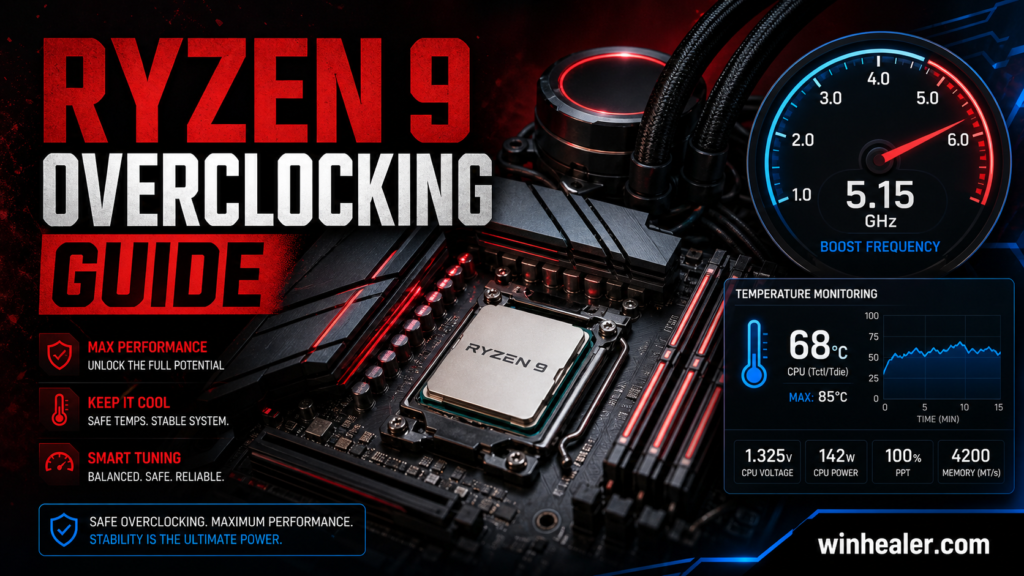
Buy a competent cooler and prioritize stable temperatures over aggressive manual settings. X3D processors have platform-specific voltage and tuning safeguards. Use supported BIOS options, current AMD chipset drivers and conservative memory profiles. A tiny benchmark gain is not worth silent memory errors or repeated crashes.
Which one should you buy?
- Choose the 7700X3D when it is meaningfully cheaper, you already own an AM5 system, and gaming value matters more than winning CPU-limited charts.
- Choose the 9800X3D for a premium GPU, very high refresh rates, heavier mixed workloads or the strongest eight-core gaming platform between these two.
- Wait if the prices are close to a faster X3D alternative or if your current CPU already keeps the GPU fully utilized in the games you play.
Final advice
Do not choose by model number alone. Record the local CPU price, required cooler, BIOS support and the graphics card you will actually use. The 9800X3D is the technically stronger processor; the 7700X3D can be the smarter purchase when the saved money buys a better GPU or monitor.
Sources
Specifications and platform claims were checked against AMD’s official Ryzen 7 7700X3D product page, Ryzen 7 9800X3D product page and AMD’s August 2026 company filing. This article does not invent benchmark numbers; real performance varies by game and test system.