Graphics-card prices are under fresh pressure in the second half of 2026, but the situation is more complicated than a single worldwide price increase. A Japanese distributor has announced higher pricing for certain Gigabyte graphics-card orders, reports from South Korea describe sharp increases on some RTX 50-series models, and supply-chain reports say AMD raised the price of GPU-and-memory bundles supplied to board partners.
None of those developments guarantees that every Radeon or GeForce card will become 20%, 30%, or 40% more expensive in every country. Retailers may still have older inventory, currency and tax conditions differ, and the biggest regional figures can include local distribution effects. The warning is still meaningful: memory, chip, and board costs are moving in the wrong direction for PC gamers.
What has actually changed in August 2026?
CFD Sales, a Japanese technology distributor, announced a price revision for Gigabyte graphics-card products on orders placed from August 1. Reporting around the notice describes increases in the 20% to 40% range. This is a confirmed regional distributor change, not a new global MSRP list from Nvidia or AMD.
Separate reporting from South Korea says RTX 50-series package costs and local card prices have risen, with increases of up to roughly 30% discussed by manufacturers and distributors. High-end models have shown the most dramatic shop prices, but premium partner cards are poor guides to the whole market because elaborate coolers, limited supply, and seller margins can push them far beyond reference pricing.
On the Radeon side, TrendForce relayed supply-chain reports that AMD raised GPU-and-GDDR bundle prices to board partners by around 10%. A bundle-price increase does not translate directly into the same percentage at checkout: it is only one part of a finished card’s cost, alongside the circuit board, voltage hardware, cooler, assembly, shipping, distribution, tax, warranty, and retailer margin.
Why graphics cards are becoming more expensive
Video memory costs are rising
A modern graphics card is sold with its VRAM, and higher-capacity products require more memory. Conventional DRAM and graphics-memory supply have been affected by the broader memory shortage while manufacturers prioritize high-value server and AI products. Even when GDDR memory is not identical to server HBM, the markets compete for investment, packaging resources, and manufacturing attention.
Advanced chips are expensive to manufacture
Leading-edge wafers, packaging, validation, and yields determine the cost of the GPU itself. Rumors about wafer-price changes should not be treated as a retail invoice, but it is reasonable that sustained increases in fabrication costs eventually place pressure on board partners and buyers.
Board partners and distributors add regional effects
Nvidia and AMD sell graphics processors or bundles to add-in-board partners, which design finished cards. Those cards then move through distributors and retailers. Exchange rates, import duties, local competition, inventory age, and shipping can make the same model cost very different amounts in Berlin, Tokyo, Seoul, or New York.
AI demand affects the priorities of the supply chain
Data-center accelerators produce far more revenue per unit than ordinary gaming cards. Consumer GPUs are not simply cut from the same finished product, yet foundry capacity, advanced packaging, substrates, memory, and engineering investment are limited. Strong AI demand can therefore make the consumer market less flexible.
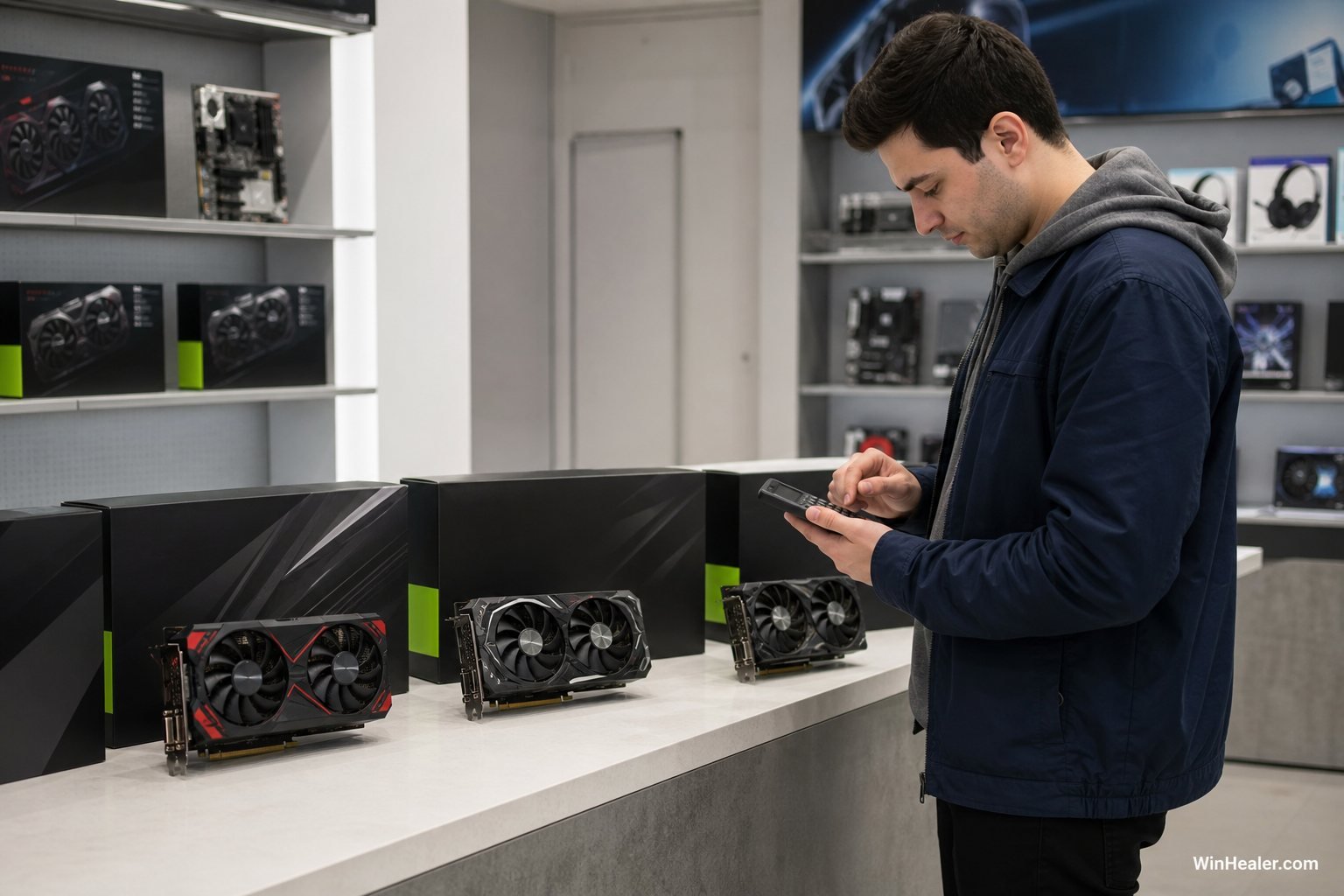
Does a 40% report mean your GPU will cost 40% more?
No. The highest figure reported from Japan applies to a particular distributor’s revision for specific Gigabyte graphics products. It should be treated as a warning signal, not a universal forecast.
A retailer with stock purchased months ago can temporarily hold a lower price. Another retailer may raise a premium model before the basic version changes. Discounts can also disappear without the official list price moving, which still makes the real cost higher for buyers.
Track the model you would actually buy. Record prices from several authorized retailers, include delivery and tax, and compare the same cooler and warranty. A vague search for “RTX 5070 price” can mix base cards, factory-overclocked cards, refurbished listings, and marketplace sellers.
Should PC gamers buy a GPU now?
Buying now makes sense when all four of these conditions are true:
- Your present card cannot deliver an acceptable experience in the games you play.
- The replacement offers a meaningful performance, VRAM, or feature improvement.
- The local price is close enough to the card’s normal market range—not merely available at any cost.
- You can buy from a reputable seller with a clear warranty and return policy.
A working PC has value. If you are building an entire system and the GPU is the final missing part, waiting months to save a modest amount may not be worthwhile. The same applies when a failing card interrupts work or study.
When waiting is the smarter choice
- Your current GPU is still adequate. A survey trend or price rumor is not a reason to replace hardware that already meets your needs.
- The available card is far above its usual price. Paying an extreme premium locks in poor value even if prices rise a little more later.
- The upgrade is too small. Moving one minor tier rarely transforms the experience after the excitement of the purchase fades.
- Your CPU or monitor is the real limit. A faster GPU cannot fix every frame-rate problem or improve a 60Hz display beyond its useful output.
- You need debt to buy it. Graphics cards depreciate and new models eventually arrive; financing an entertainment component at high interest is rarely sensible.
How to judge whether a GPU price is fair
MSRP is a starting reference, not a guarantee. AMD’s announced launch price for the Radeon RX 9070 GRE was $549, for example, but real prices depend on region and partner design. A useful comparison should include:
| Check | Why it matters |
|---|---|
| Price per performance tier | The cheaper card may provide most of the frame rate |
| VRAM capacity | Insufficient memory can restrict textures and future headroom |
| Total system cost | A new PSU, case, or adapter can change the deal |
| Warranty and seller | A small saving is not worth losing reliable support |
| Used-market alternative | Last-generation cards may offer better value if tested carefully |
New, used, or refurbished?
A used GPU can be a rational response to rising new-card prices. Ask for proof that the card works, inspect the fans and connectors, and test temperatures, clocks, display outputs, memory stability, and sustained load. A low price is not a bargain if the card has intermittent artifacts or no practical return option.
“Refurbished” can mean anything from a professionally repaired card with a warranty to a returned item placed in another box. Buy based on the seller’s written warranty, not the label alone.
Previous-generation hardware deserves consideration when it supplies enough VRAM and performance. Check feature differences too: ray-tracing capability, upscaling support, frame generation, video encoding, power efficiency, and driver support may matter as much as raw FPS.
Do not panic-buy more GPU than you need
Fear of higher prices can push buyers into the wrong tier. A costly 4K card is not automatically good value for a 1080p monitor. Start with the games, resolution, refresh rate, and settings you genuinely use. Then choose the least expensive card that reaches that target with reasonable headroom.
For competitive 1080p, CPU performance may be as important as the GPU. For high-quality 1440p, a balanced midrange card with 12GB or 16GB of VRAM is increasingly attractive. For 4K with heavy ray tracing, the budget must account for a high-end GPU, sufficient power, case airflow, and the possibility that premium models carry the worst markups.
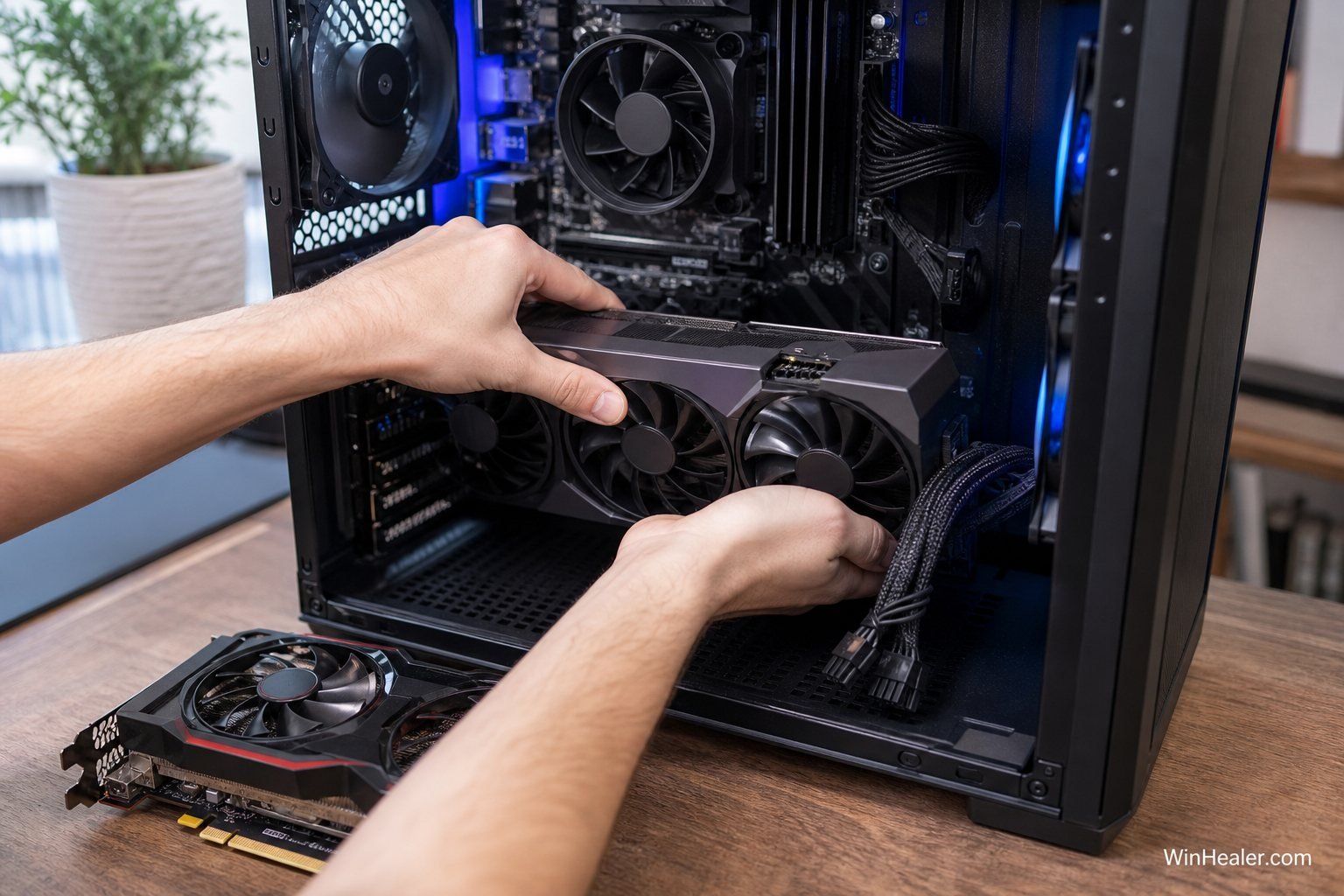
Seven buying rules for the 2026 GPU market
- Set a maximum total budget before following deals.
- Choose a target resolution and frame-rate range.
- Compare at least three reputable local retailers.
- Use independent benchmarks for the games you play.
- Check VRAM, power supply, connectors, and case clearance.
- Avoid marketplace listings that hide the exact model or warranty.
- Once a fair option meets your needs, buy it and stop trying to predict the perfect day.
Could GPU prices fall again?
Yes. Weak consumer demand, improved memory supply, currency changes, excess retailer inventory, or aggressive competition can push prices down. The current reports do not prove that every market will rise continuously.
The opposite is also possible. If memory and manufacturing costs remain elevated while distributors replenish at higher prices, today’s cheaper stock may disappear. That is why a needs-based decision is safer than betting on a precise market forecast.
The bottom line
GPU-price pressure in 2026 is real, but the evidence is regional and layered. Japan’s distributor revision, South Korean market reports, and reported Radeon bundle increases are not one global price sheet. They do show that the supply chain is facing higher memory and component costs.
If you need a GPU and find the right model at a defensible local price, buying now is reasonable. If your current system still handles your games or the available prices are clearly inflated, waiting is equally reasonable. The best protection against a difficult market is not panic—it is knowing your performance target, tracking the exact card, and refusing to pay for hardware you will not use.
Sources and further reading
- Tom’s Hardware: Japanese distributor GPU price revision
- Tom’s Hardware: South Korean RTX 50-series pricing reports
- TrendForce: reported AMD GPU-and-GDDR partner-kit increase
- AMD: Radeon RX 9070 GRE launch pricing
- AMD quarterly filing: memory and material supply-cost risks
Editorial note: Prices vary by country, currency, tax, seller, stock age, and card design. Reported supplier or distributor increases should not be treated as guaranteed changes for every retail model.