A Windows 11 PC that keeps returning to recovery can make every option feel like a gamble. Quick Machine Recovery is designed for a known, widespread startup failure for which Microsoft can publish a repair through Windows Update. Windows Recovery Environment looks for that remediation, applies it, and tries to start the PC again.
It is a useful addition to Windows 11, but its name can create the wrong expectation. Quick Machine Recovery is not a cloud backup, it does not repair failed hardware, and it cannot guarantee a solution for every boot loop. Knowing those limits is the key to using it sensibly.
What Quick Machine Recovery does
Quick Machine Recovery, often shortened to QMR, builds on Startup Repair and Windows Recovery Environment. After repeated boot failures, Windows can enter recovery and query Windows Update. If Microsoft has published a matching remediation, Windows downloads it, applies it, and restarts the computer.
Microsoft describes QMR as a best-effort feature. That phrase matters. A boot loop can be caused by a bad system update, but it can also come from a damaged drive, unstable memory, an incompatible third-party driver, malware, a firmware problem, or corrupted files unique to one machine. A cloud service can deliver a Microsoft fix for a recognized incident; it cannot make a failing SSD healthy.
The feature is available on Windows 11 version 24H2 build 26100.4700 or later. On unmanaged Home PCs and unmanaged Pro PCs, cloud remediation is enabled by default with a one-time automatic scan. It is disabled by default on enterprise-managed systems so that the organization can choose its recovery policy.
When QMR is the right tool
Quick Machine Recovery is worth trying when Windows suddenly fails to start repeatedly and the timing suggests a broad software incident—for example, multiple PCs affected after the same Windows component or driver change. It is also reasonable when Windows automatically presents QMR in recovery and you have a working internet connection.
It is less likely to help when the firmware cannot see the storage drive, the PC makes unusual hardware noises, memory diagnostics report errors, the machine powers off under load, or the failure began immediately after a physical upgrade. Those signs point toward hardware, firmware, cabling, or a component-specific problem. QMR also is not the tool for recovering deleted documents; it does not restore personal files from a backup.
If the device belongs to an employer or school, follow the organization’s support process. A managed PC may have QMR intentionally disabled, a preconfigured network, or another recovery workflow.
Set it up before a failure
If Windows still starts, you can check QMR from the Settings app. Preparing it now is easier than learning the interface during a startup emergency.
- Install current Windows updates and restart when requested.
- Open Settings > System > Recovery.
- Select Quick machine recovery.
- Turn on Quick machine recovery if it is available and currently off.
- If offered, choose whether Windows should automatically check for solutions. Microsoft’s default on unmanaged Home and Pro devices is a one-time scan.
Microsoft also provides retry intervals and automated retry controls, mainly for administrators. More retries are not necessarily better for a home PC. If no repair has been published, repeatedly rebooting and scanning does not address the underlying cause and delays access to other recovery options.
How to run Quick Machine Recovery from a boot loop
After several failed startup attempts, Windows can enter the Windows Recovery Environment automatically. If Windows still reaches the desktop, you can enter that environment in a controlled way through Settings > System > Recovery > Advanced startup > Restart now. Save open work first.
Once the blue recovery menu appears:
- Select Troubleshoot.
- Select Advanced options.
- Select Quick machine recovery.
- Connect the PC to the internet when prompted.
- Allow Windows to search for a remediation. Keep a laptop connected to power and do not force it off while a repair is being applied.
- If a solution is found, Windows downloads and applies it, then restarts the PC.
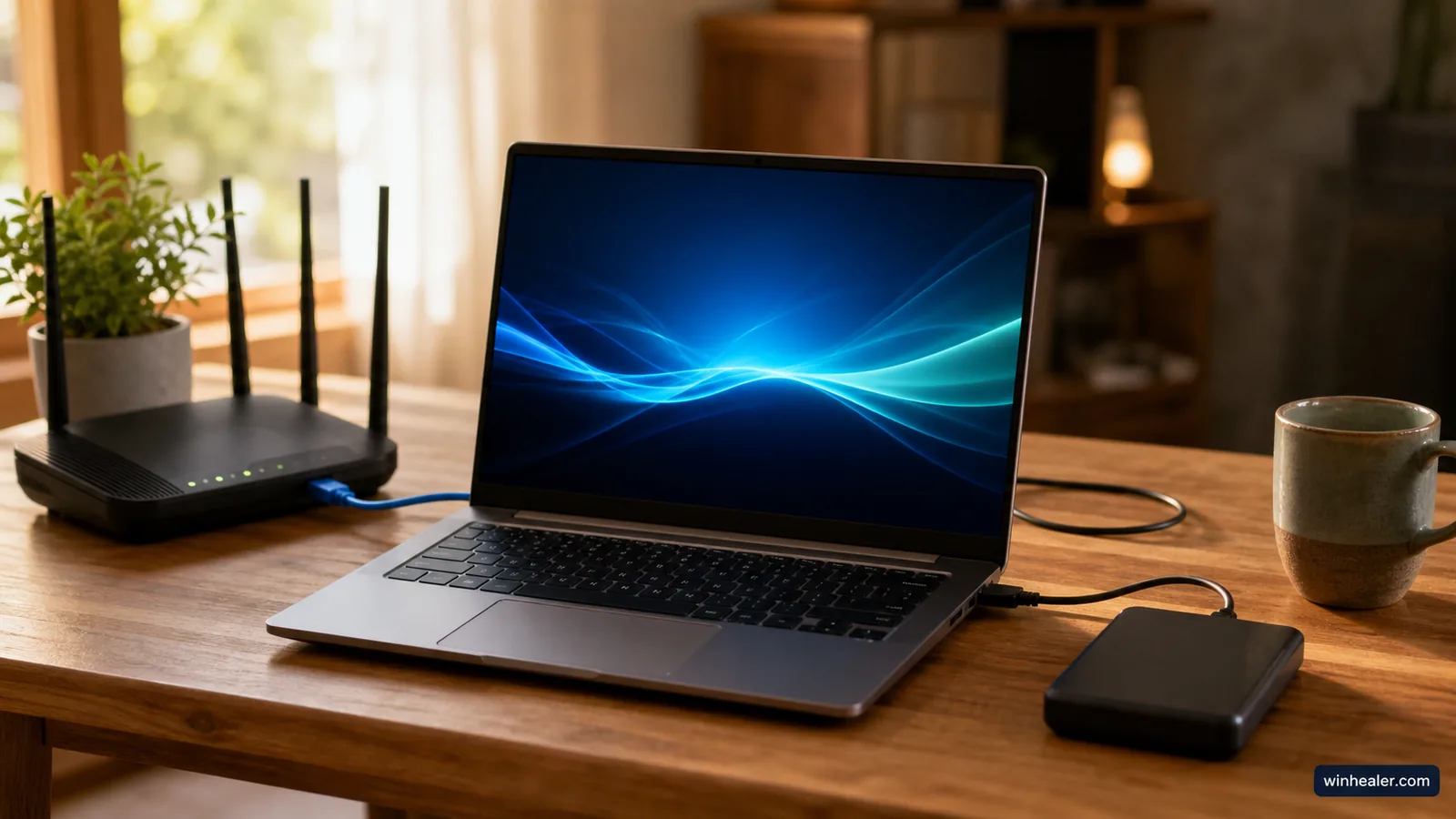
A wired Ethernet connection is the simplest choice. Microsoft currently documents support for wired networks and password-based WPA/WPA2 Wi-Fi in the recovery environment. Networks that require a browser sign-in, enterprise authentication, or an unsupported wireless method may not connect. If recovery cannot get online, QMR cannot contact Windows Update.
What the recovery process is doing
Windows detects repeated startup failure, enters recovery, connects to a network, and scans Windows Update. If a matching remediation exists, it applies the repair and restarts. The PC then tests whether it can boot normally.
If the repair fails, the device can return to recovery. If no solution is available and the PC uses the normal one-time scan, Windows presents other recovery choices. Administrators can configure scheduled retries, but Microsoft does not describe QMR as a substitute for diagnosis.
If QMR says no solution was found
“No solution” does not mean the PC is beyond repair. It means Microsoft’s service did not offer a matching cloud remediation at that time. Return to Advanced options and choose the least destructive tool that fits what happened:
- Startup Repair: Use this when Windows will not start or keeps loading. It is a local diagnostic and repair option.
- Uninstall Updates: Consider this when the boot loop began immediately after a recent Windows quality or feature update.
- System Restore: If restore points exist, this can reverse recent system, driver, or application changes without targeting personal documents.
- Startup Settings or Safe Mode: Useful when Windows may start with a minimal driver and service set, allowing removal of a recent driver or application.
- Reset this PC or reinstall Windows: These are later steps. Depending on the option, apps, settings, and personal files may be removed. Back up recoverable data and locate the BitLocker recovery key before choosing a destructive recovery path.
If the firmware does not detect the system drive, the PC repeatedly loses power, or storage and memory tests fail, stop treating the problem as a Windows-only incident. Check the manufacturer’s diagnostics or use qualified hardware service. Reinstalling Windows cannot repair a defective component.
What to check after Windows starts again
Successful recovery is the beginning of verification, not proof that every cause is gone. Sign in, save any important work, and create or refresh a backup. Then open Settings > Windows Update > Update history. Microsoft says an applied QMR remediation appears in the Quality updates section.
Install any later Windows updates that address the incident and check the PC manufacturer for appropriate firmware and driver updates. Use the exact model page; a similarly named driver for another model is not a safe substitute. If the boot loop returns, note the date, visible error code, recent changes, and whether the drive appears in UEFI. Those details are more useful than repeatedly running random repair commands.
Quick Machine Recovery compared with other options
QMR downloads a targeted remediation for a recognized incident. Startup Repair works locally, while System Restore returns system state to an earlier restore point. Reset reinstalls Windows and removes applications and settings; installation media provides a fuller reinstall path.
There is also a separate feature named Cloud Rebuild in preview builds. It performs a full operating-system reinstall and removes local data. That is not Quick Machine Recovery. Similar cloud language does not make the two tools interchangeable.
Common questions
Will Quick Machine Recovery delete my files?
QMR applies a published remediation; Microsoft does not describe it as a reset or reinstall. However, a machine in a boot loop is already in an abnormal state, so maintain backups whenever possible. Separate options such as Reset or reinstall can remove data.
Does it work without internet access?
No. QMR needs a supported network connection in Windows Recovery Environment to query Windows Update and download a remediation.
Can it fix every blue screen?
No. It is designed for known widespread startup failures with a Microsoft-published repair. Blue screens caused by individual drivers, hardware faults, overclocking, or local corruption need diagnosis appropriate to their cause.
Bottom line
Quick Machine Recovery is a sensible first attempt when Windows 11 enters a boot loop during a recognized software incident. It can deliver a repair from Windows Update without immediately resetting the PC. Give it one supported attempt, read the result, and then move to the appropriate traditional recovery or hardware diagnosis if no remediation exists. Its strength is a focused cloud repair—not magic recovery for every computer that will not start.